A few weeks before Christmas, Google decided to launch an amazing new feature for Google Maps and announced it with little marketing.
To no one’s surprise, half of the update focused on AI and machine learning becoming more involved in Google Maps in one way or another. It was, in fact, the very last update that is a silent game-changer in my opinion.
Google Maps announced a new update that lets users review businesses on Maps pseudonymously. Within a few steps, you’re now able to post reviews without using your real name or identity.
Sounds like a neat feature, doesn’t it? Well, it’s actually a LOT more than that. I made a LinkedIn post about it a few weeks back, but I couldn’t go into much detail due to the platform limitations.
How to set up a nickname and alternate profile picture on Google Maps?
Before we dive into my rambling about what’s great about this feature and what’s not, let me show you how it works.
1. On Mobile
Open the Google Maps app (on Android or iOS). There are two ways to reach your profile page in the mobile application.
First, you should have a ‘Contribute’ button in the bottom-right corner of your default app screen. Press the button and select the ‘View profile’ option at the top to reach your profile page.
[IMG – Google Maps App – Account]
Alternatively, you can select your photo/account from the top right and visit your profile from the ‘account’ page of the app.
[IMG – Google Maps App – Contribute]
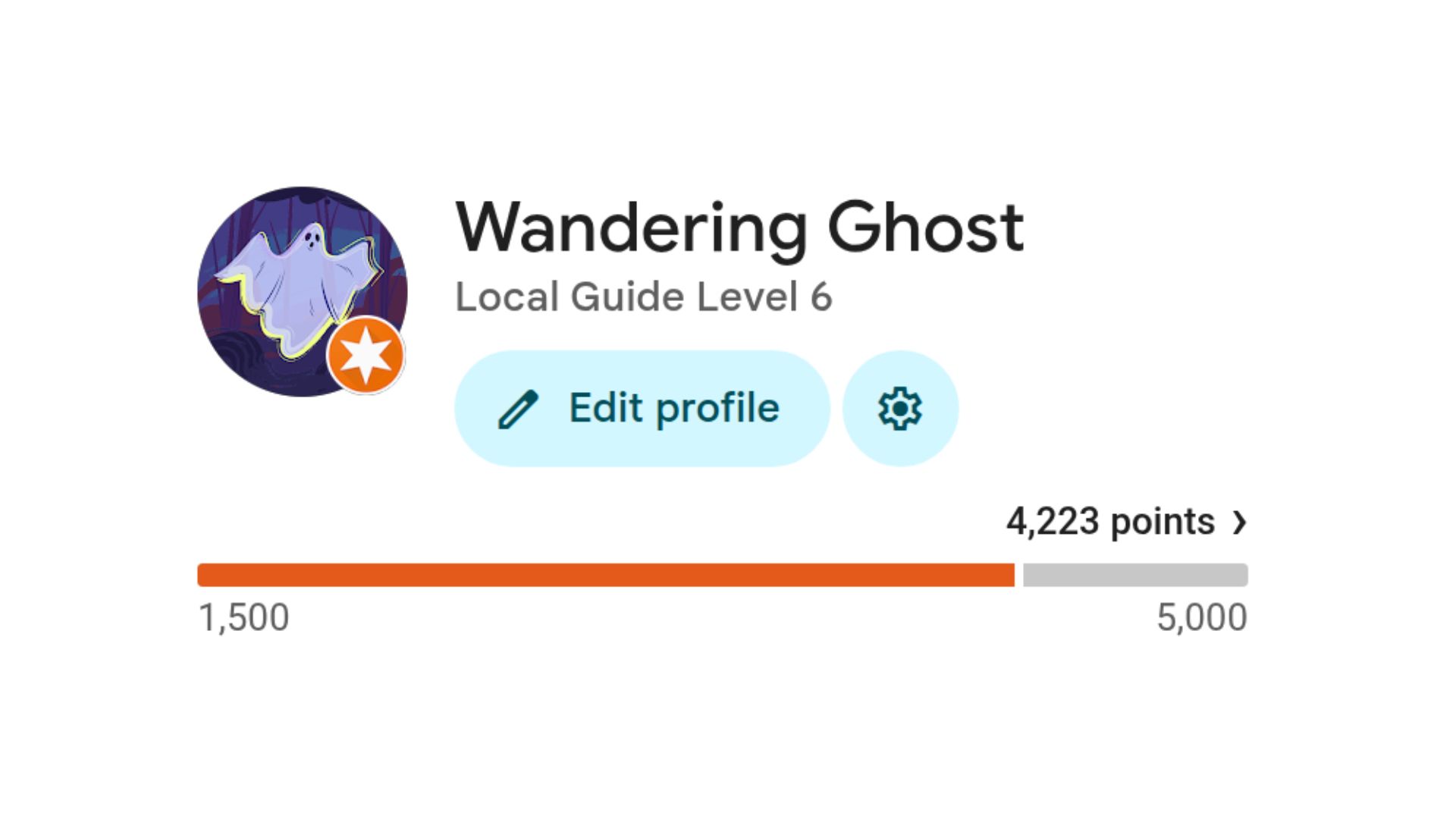
Once you’re on the profile page, you’ll see an ‘Edit profile’ button. Press it, then the checkbox on the subsequent ‘Edit profile page’ to allow you to use a custom display name and picture.
You can now select an alternate profile picture and name. Do that, then hit save to make your pseudonymous profile live.
[IMG – Google Maps App – Pseudonymous Profile]
2. On Web
Go to the Google Maps website and select ‘Your Contributions’ from the burger menu.
[IMG – Burger Menu]
Next, click the ‘Edit profile’ button and check the option above your PFP (profile picture) to create a custom display name and photo for posting.
[IMG – Edit Profile]
Select the desired profile photo, enter your nickname, and click Save. It will ask for confirmation; hit Save again, and you’re done!
[IMG – Anonymous Profile]
The Good
In marketing, we throw around some buzzwords quite often. And ‘game-changer’ is undoubtedly one of them. That said, I genuinely believe that it fits here. This subtle, okay-who-cares-looking feature is going to reshape review and trust aggregation for so many businesses that provide essential services.
I have worked with many business owners in the past who had to rely on alternative review aggregators like Trustpilot or build their own in-house review systems purely because of the nature of the service.
Even in progressive cities, very few people will go out of their way to review a mental health therapist or a divorce lawyer. Doesn’t matter if the service was exceptional and deserved a positive review, or if it was poor and warranted a negative review for the rest of the public – most of us wouldn’t want our names associated with that, which is fair.
On top of this, there’s a core problem with alternative review aggregators like Trustpilot that you cannot ignore if you have some marketing experience. Trustpilot is not Google. Don’t get me wrong, it’s a fantastic, trustworthy service, and we use it ourselves for Sloth Desk.
However, would we have made Trustpilot our primary review aggregator if Google allowed remote companies without a brick-and-mortar shop to be reviewed under its umbrella? Perhaps not, because any company other than Google cannot command the same level of trust.
The final option, as I mentioned earlier, is building your own review system on your website. But that’s even more dicey. Unfortunately, very few people are going to put their 100% trust in those reviews, including myself.
All of that has now changed thanks to Google Maps’ new feature. Businesses in sensitive categories can finally ask for Google Maps reviews directly, with just a few extra clicks for the reviewer. And reviewers can be truly honest in their reviews without worrying about social backlash or privacy breaches.
Is the experience perfect? Not even close. These aren’t true “profiles” to begin with.
The Bad
When I heard about this feature, I assumed it would be a profile-based system where users could, per review, choose whether to post publicly or anonymously.
Oh, wait, my bad. Pseudonymously, not anonymously. What’s the difference, you ask? These reviews aren’t anonymous because Google will associate them with your profile on the backend. Google can still track your activity and make the pseudonymous reviews public only at your behest.
The problem isn’t that Google chose pseudonymity; it’s that the implementation is currently too shallow.
But that’s okay. True anonymity was never the purpose of this feature, and it is in everybody’s best interest that these reviews are associated with the user profile. But wait, I am getting ahead of myself. First, let’s clear the issue of ‘profiles.’
Since the system is not profile-based, it rewrites your review history each time you make a change. If you choose the option to assume a nickname, it’ll display that name and profile everywhere – including your old reviews. And vice versa.
Let me explain with examples. Say, you want to secretly review a doctor who went out of their way to assist you. When you create a custom profile, it will display on all your old reviews. If you had any pictures of yourself or any other identifiable details in the old reviews, people can now put two and two together by visiting your profile. Granted, most people won’t do that, but it’s still something worth knowing.
I believe that’s the biggest flaw of this feature, because it compels you to create an alternate account with another Gmail ID, which would’ve been anonymous from the get-go.
And the opposite is also true. If at any point in the future you decide to post something publicly, it’ll switch to your public name everywhere, including the reviews you wanted to keep private.
The Ugly
Remember when I mentioned that it’s a good thing reviewers can now be candid? That’s only half the story.
The uncomfortable truth is that most reviews are driven by an agenda. And by lowering the cost of leaving a public review, Google has also reduced the friction for bad actors. This update will inevitably make it harder for end users to trust what they read on Maps fully.
It is also why I said earlier that these reviews must remain tied to a real user account at the backend. Google has publicly stated that its existing safeguards will continue to monitor suspicious activity, even for pseudonymous profiles.
In theory, nothing changes. In practice, we know that’s more than optimistic.
Google already has a fake review problem. There are entire ecosystems of Telegram groups, bulk Gmail accounts, and paid review farms – all designed to game the system at scale. This feature doesn’t create that problem, but it does make it easier to exploit.
Ironically, this also explains one of the most frustrating design choices in the update: rewriting your entire review history when you change your name. As clumsy as it feels, it’s likely Google’s way of preventing users from spinning up multiple pseudonymous identities within a single account.
However, they could’ve handled this better by allocating more time and development effort into implementing this feature. Even something as simple as limiting profile switches or isolating pseudonymous reviews would’ve gone a long way. Rewriting history is a blunt and understandable solution, but far from elegant.
That said, dismissing this feature because of potential abuse would be shortsighted.
For businesses operating in sensitive categories, this is still a net positive. It opens the door to more honest feedback, from people who would’ve otherwise stayed silent. And for users, it’s a reminder to do what we should’ve been doing all along: read reviews critically, look for patterns, and never trust a single data point.
This update isn’t perfect, not by a long shot, but it’s a meaningful step in the right direction. And like most Google launches, it’ll only really show its hand once people start using it at scale.